Learning about Entrepreneurship and Civil Society Activism

Ongoing Learning about Entrepreneurship and Civil Society Activism

The mosaic of learning experiences in elective politics, teaching, public service, business and international organizations has enabled Katherine to collaborate with clients and colleagues on inclusive dialogue and a search for common ground on global social issues.

Hagen Resources International (HRI) was established as a limited liability company under Swiss law in 2001. Through HRI, Katherine works with development agencies, foundations and individual clients on individualized projects that are targeted to their specific needs. Illustrative HRI projects include:

  • Friedrich Ebert Stiftung on trade and labor standards, as well as major articles published on ILO experiences with the international financial institutions and the future of tripartism
  • The US Department of Labor on multi-stakeholder collaboration on conditions of work standards in the Caribbean and Southern Africa
  • The Suez Observatoire Sociale on social dialogue initiatives in Europe and Africa
  • Unilever on dialogues with international organizations and NGOs in Geneva on its Sustainable Living Plan
  • The ILO on a continuing variety of projects, such as a global survey of sectoral  employment trends, building a Child Labor Platform and  implementing the ILO Code on HIV/AIDS in the workplace
  • The Council for Multistakeholder and Multisectoral Dialogue on the interplay between business and international organizations.

We enjoyed working with labour relations experts in the US, the Caribbean and in southern Africa, in our first major project. Susan Brown and Lucy Howe-Lopez helped to coordinate this project and so much more!
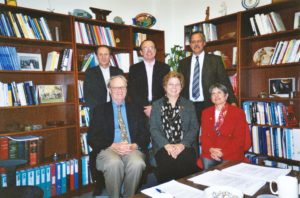
Following a series of brainstorming sessions in Geneva and Washington, DC funded by the Friedrich Ebert Foundation, Katherine then mobilized a diverse array of activists from civil society, international organizations, diplomatic missions and the private sector to establish the Global Social Observatory in 2004.  The GSO Management Committee was drawn from these groups to ensure a representative diversity of perspectives, including from both developed and developing countries. Committee members had a mix of backgrounds with experience in civil society, faith-based NGOs, UN agencies, foundations, academia, development agencies, diplomatic missions and business. Our initial board signed the incorporation papers in April 2004. 
As a member-based NGO, the GSO provided a deliberately neutral forum for multi-stakeholder dialogue in search of common solutions to global social issues. With multi-source funding from both public and private sources, the GSO has enabled an inclusive multi-stakeholder collaboration on many topics. Examples include:

  • Corporate Social Responsibility and Trade
  • Gender and Trade
  • HIV/AIDS and Social Responsibility
  • Diabetes and Health in the Workplace
  • Collaborative Action against Non-Communicable Diseases
  • Managing and preventing Conflict of Interest in the Scaling Up Nutrition Movement
  • Cross-cutting approaches to the 2030 Agenda for Sustainable Development

See the website section on “Tools” for a collection of HRI and GSO work products, while the “Archives” section provides a history of topical and meeting reports.  The “Gallery” section offers an visual overview of the wonderful partners in both GSO and HRI initiatives, along with the variety of participatory meetings, the collection of group photos and the awesome array of guest speakers at HRI and GSO events.

Katherine also continues to write in-depth commentaries on global social issues, available in the “Commentaries by Katherine” section of this website. And here in this “Reflections” section of the website, one can find the work-in-progress for a full-length book to consolidate and update her views and lessons learned from this mosaic of experiences for promoting and facilitating inclusiveness on global social issues.
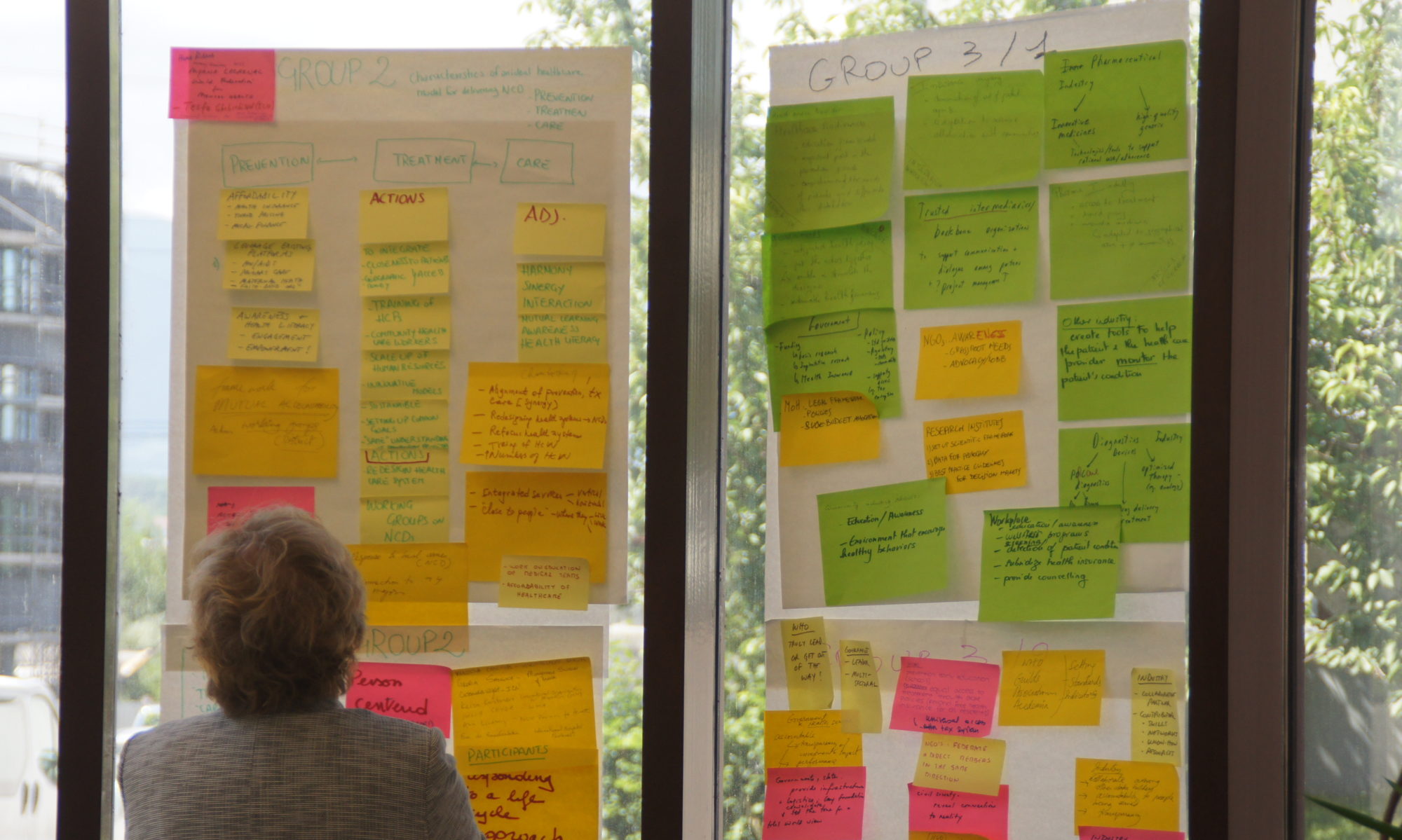
International Organizations Delivering Norms, Information and Capacity

Experiences in the World of International Organizations

Katherine’s involvement with international organizations dates back to her  teaching and research on the United Nations system as a college professor, fresh out of graduate school.  Her career path took a domestic turn as she played a leading role in her community on women’s rights and in elective politics, but she returned to her interest in international organizations when she was invited to join the International Labor Organization (ILO) as Deputy Director-General.  

Continue reading “International Organizations Delivering Norms, Information and Capacity”

Patrimoine and Reggae at UNESCO

I was recently at UNESCO headquarters in Paris for the 13th Internet Governance Forum (IGF 13). Little did I know, while wandering the conference rooms and lobby displays devoted to the transformative path of the Internet into the high-tech world of the 21st century, that this same organization UNESCO was hosting a review of applications for the “Intangible Cultural Heritage of Humanity” list.  One thing looking to the future and one thing looking to the past! Continue reading “Patrimoine and Reggae at UNESCO”

Reminiscenses on Civil Rights and George H.W. Bush

On 21 November 1991, the US Congress passed the most comprehensive civil rights legislation since the Civil Rights Act of 1964. Surprisingly, President George H.W. Bush did not veto the bill, even though he had vetoed a previous bill with similar provisions in 1990. Timing seems to have been a factor. Clarence Thomas had just gone through a very controversial confirmation process in the US Senate, driven primarily by the sexual harassment charges brought against him by Anita Hill. But it may also have been that enough moderate Republicans had shifted to support the 1991 bill, such that it had become “veto-proof” (a 67-vote majority protecting the over-ride authority of two-thirds plus one). As a participant in the enactment of the Civil Rights Act of 1991, however, I do have a few words to say about how it came about, triggered by reflections upon the passing of George H.W. Bush. Continue reading “Reminiscenses on Civil Rights and George H.W. Bush”

The French Impact on the Internet Governance Forum

The Internet Governance Forum (IGF) is an annual event that has enabled participants from many different sectors to mobilize or at least maintain a modicum of a global consensus for a free global Internet ever since its inception in 2006. To me, the IGF serves as an excellent example of the kind of multi-stakeholder engagement that I believe needs to be promoted across the “globalizing” world. Although the IGF has gone through a number of “ups” and “downs” over the years, the 13th IGF, which met in Paris from 12 to 14 November 2018, is definitely one of the “ups”.  In fact, the French sponsorship of this latest IGF has stimulated a revived hope for the IGF and its commitment to a globally open and free Internet. Continue reading “The French Impact on the Internet Governance Forum”

Food and Gender in Lyon

Discovering the unique character of Lyon in the world  of food was an eye-opening experience for us. Well, a mouth-watering experience, too. And a tasting trip of refined simplicity, although much of it was so elegantly presented that the simplicity of the ingredients could easily have been missed.  And we discovered, too, the strange and somewhat deceptive history of the famed “Mères de Lyon” (Mothers of Lyon). Continue reading “Food and Gender in Lyon”

Reflections on Gender and Digital Literacy

As someone who is gradually acquiring a minimum level of digital literacy – and inspired to move up a notch or two – I attended two events recently to learn more about the latest insights on the interplay between gender and digital literacy. One was a gathering of professional women in Lyon, while the other was a global forum on the Internet in Paris.  The first was more focused on gender questions pertaining to digital literacy in business, while the second covered a wider array of subjects, including a broader view on gender itself, having to do with both access and literacy. Even though they were quite different events, it is useful to compare the different approaches to gender questions in the digital world at these two events while also highlighting some of the commonalities Continue reading “Reflections on Gender and Digital Literacy”